First edition, October 2026
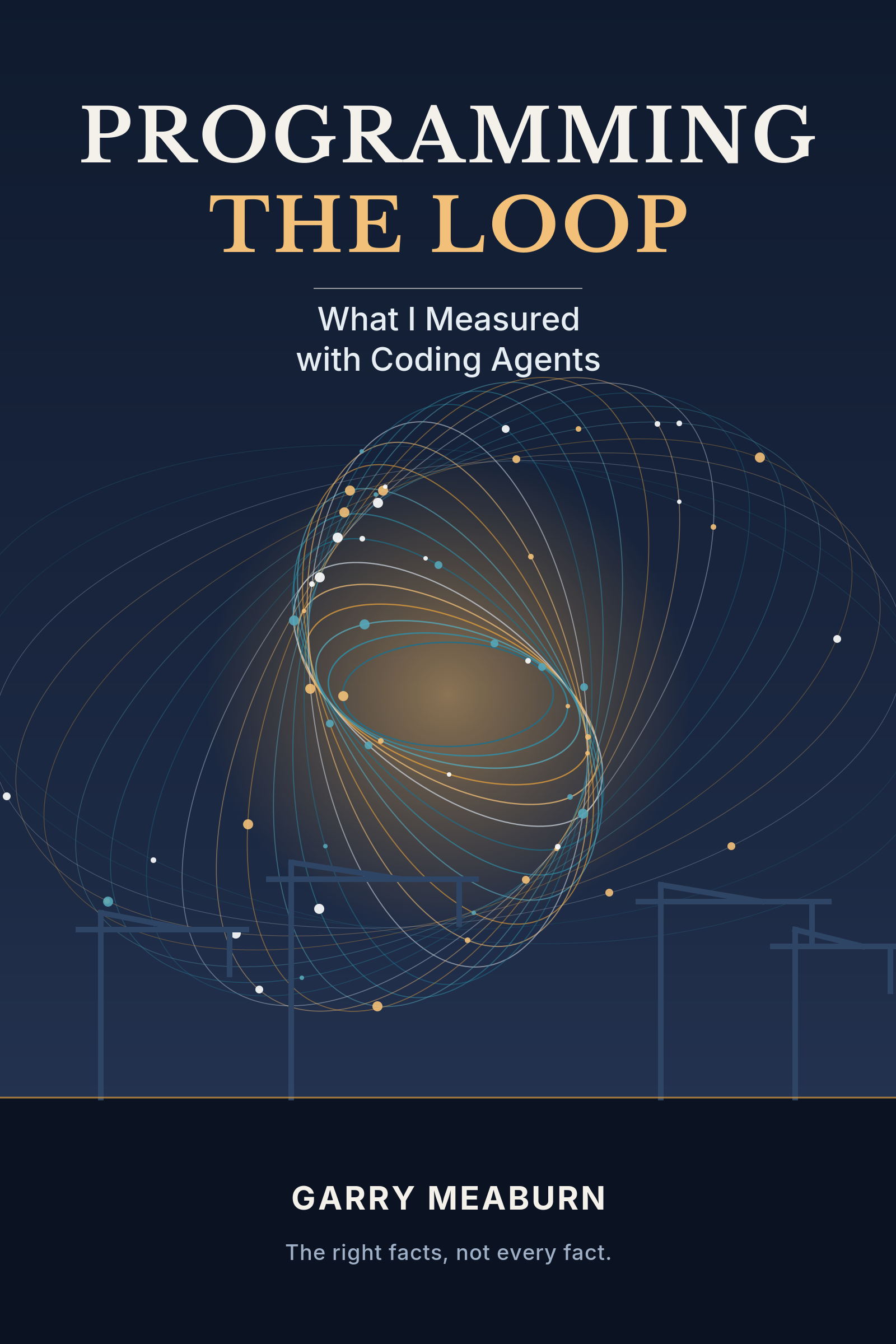
Programmingthe Loop
What I Measured with Coding Agents
The Guide
The full text is on this site. Every chapter, checklist, table, figure and reference from the October 2026 first edition is in the Guide. I'll update it here when something needs correcting or adding.
The PDF is still the October 2026 first edition if you want that fixed copy. Prefer theGuide for the current wording.
Chapters
- —Foreword: why I ran the experimentsFindings in brief, and how findings differ from recommendations.
- 01Facts, checks and upkeepTerms, the evidence in outline, and the worked example the rest of the book follows.
- 02Briefs, plans and specificationsDecide what the change is, how you will know it is done, and what must not change, before an agent writes code.
- 03The right facts, not every factThe main evidence chapter: generated context on a readable repository, stale dependency knowledge, and facts across a repository boundary.
- 04One verifiable change at a timeHand an agent one change you can verify at a time; the quality hangs on step size and the verify step.
- 05Proof, not promisesExecutable checks and an independent judgement of the work, not only the agent’s account of it.
- 06The harness and the friction loopAgents trip on the same few environment problems; put fixes in the harness around them, not only in prompts.
- 07Parallel agentsDeliberately short: none of my experiments measured parallel working as such, so this is judgement and other people’s published practice.
- 08Review, merging and riskReview by the consequence of being wrong: reversibility, blast radius and verification strength.
- 09Tools and honest measurementPrefer boring tools with clear errors, and measure set-up changes with repeated runs rather than single anecdotes.
- 10Safety, cost and the human in the loopSecurity, cost and skills; keeps general practice apart from what I measured in the earlier trials.
- 11The take-home kitStart with a short AGENTS.md, runnable checks and contracts for unread dependencies; add each further layer only when it has earned its keep.
Licence and PDF download
© Garry Meaburn 2026. This guide is free to read. You may share the unchanged pages (or the October 2026 PDF) with others, free of charge, as long as you credit Garry Meaburn as the author and keep the copyright notice. You may not sell it, use it commercially, or share modified versions, without written permission.
Quoted material belongs to its authors and is used briefly, with attribution and a link, for commentary. My software repositories carry their own licences, listed in "About the evidence" at the back; they are not covered by the copyright line above.
Disclaimer. Practical opinion, written in good faith, about tools that change month to month. Not legal, security or financial advice. My experiments are small and I say so each time. Test anything here on your own code before you rely on it, and keep backups: agents can and do delete things. The views in this book are the author's own and do not represent any employer, past or present.
The latest related repositories are atgithub.com/meabs.
Feedback
If a number, a limit or a claim is wrong, I want to know. Prefer something concrete: which page, which figure, what you think it should say.